














Keynote Speakers
 Wen Gao
Director, Pengcheng Laboratory, China
Boya Chair Professor, Peking University, China Fellow of IEEE Life Fellow of ACM Talk TitleChina Computing Power Network and International Cooperation AbstractThe computing power network is an essential component of the national "Six Networks" development deployment. Just as electricity evolved into power grids, computing power is advancing toward a computing power network. This report first reviews the brief history of power grid development, then introduces the China Computing Power Network (ZPG Pilot Initiative) proposed by Pengcheng Laboratory and the vision of the ZPG Initiative. Via a new-type super-direct optical network, ultra-large-scale green computing power across regions of China can be delivered to users with ultra-broadband and low-latency performance, enabling green and high-quality coordinated development of computing power and energy. It also presents the progress of the ongoing China Computing Power Network Initiative, including but not limited to the Pengcheng CloudBrain series of super intelligent computing platforms, the Shenzhen–Guizhou direct optical link demonstration line, nationwide integrated computing power monitoring, the GSnet National Laboratory private network, as well as open-source open training grounds built upon the computing power network and relevant international cooperation. Bio.:Professor Gao has long been engaged in cutting-edge research on artificial intelligence applications, multimedia technology, and intelligent computing. In the field of multimedia technology, he spearheaded the establishment of the AVS digital audio and video coding standard system, systematically advancing China’s video industry from a blank slate in core technologies to an internationally leading position. In artificial intelligence, he has led the development of national independent computing infrastructure. His team developed the Pengcheng CloudBrain series of major scientific facilities. He also oversaw the top-level design and advancement of the China Computing Network strategic layout, laying the core technological foundation for national computing sovereignty. As the first completer, he has won 8 National Science and Technology Awards, as well as the Wu Wenjun Artificial Intelligence Highest Achievement Award and the IEEE Social Infrastructure Innovation Award. 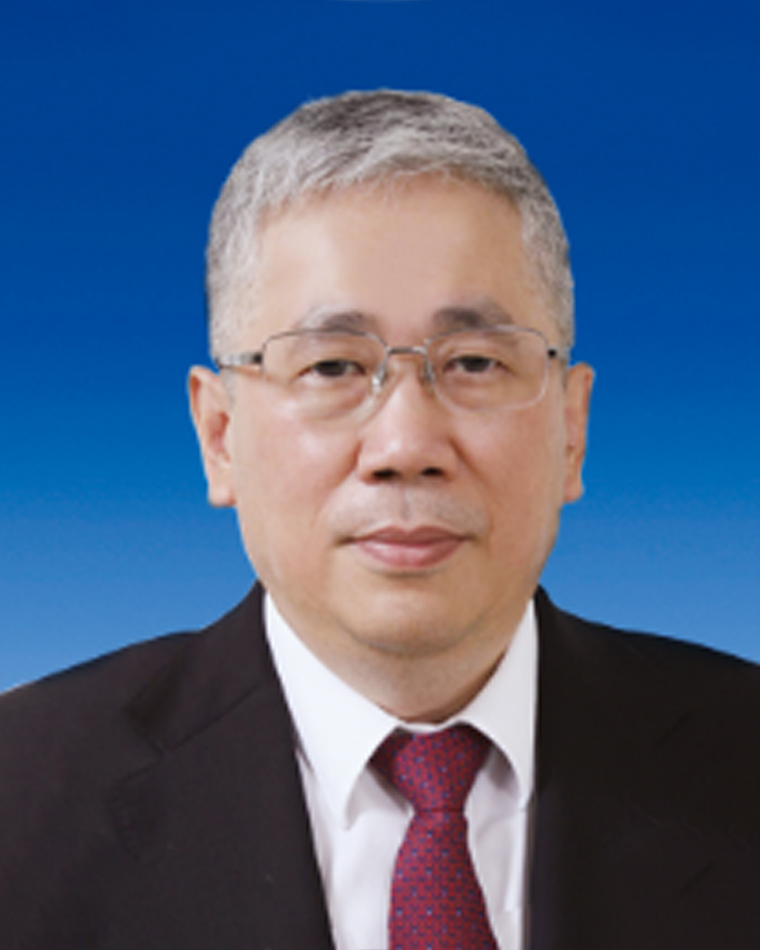 Ping Zhang
Professor of Beijing University of Posts and Telecommunications, China
Counsellor of the State Council Member of the Chinese Academy of Engineering Director of the State Key Laboratory of Networking and Switching Technology Editor-in-Chief of Journal on Communications Fellow of IEEE Talk TitleConvergence of Communication and AI—Theory, Technologies and Field Trials AbstractIn recent years, wireless communication systems have pursued performance gains by exploiting physical resources such as time, spectrum, power, and antenna dimensions, increasing channel capacity limits but raising concerns about long-term sustainability. Motivated by the integration of AI into wireless communications, a new ComAI paradigm converged communications and intrinsic native AI has emerged as a promising alternative, centered on semantic communications. Bio.:Ping Zhang is Professor of Beijing University of Posts and Telecommunications (BUPT), Counsellor of the State Council, Member of the Chinese Academy of Engineering (CAE), Director of the State Key Laboratory of Networking and Switching Technology. He is the Editor-in-Chief of Journal on Communications, and IEEE Fellow. He has long been committed to theoretical research and technological innovation in mobile communications. He has received many awards and honors including the Grand Prize for the National Science and Technology Progress Award. He is one of the most well-known key contributors to the development of China-pioneered mobile communication technologies, which have been widely adopted on a global scale. His research interests include next-generation mobile networks, semantic communications, and ComAI system. 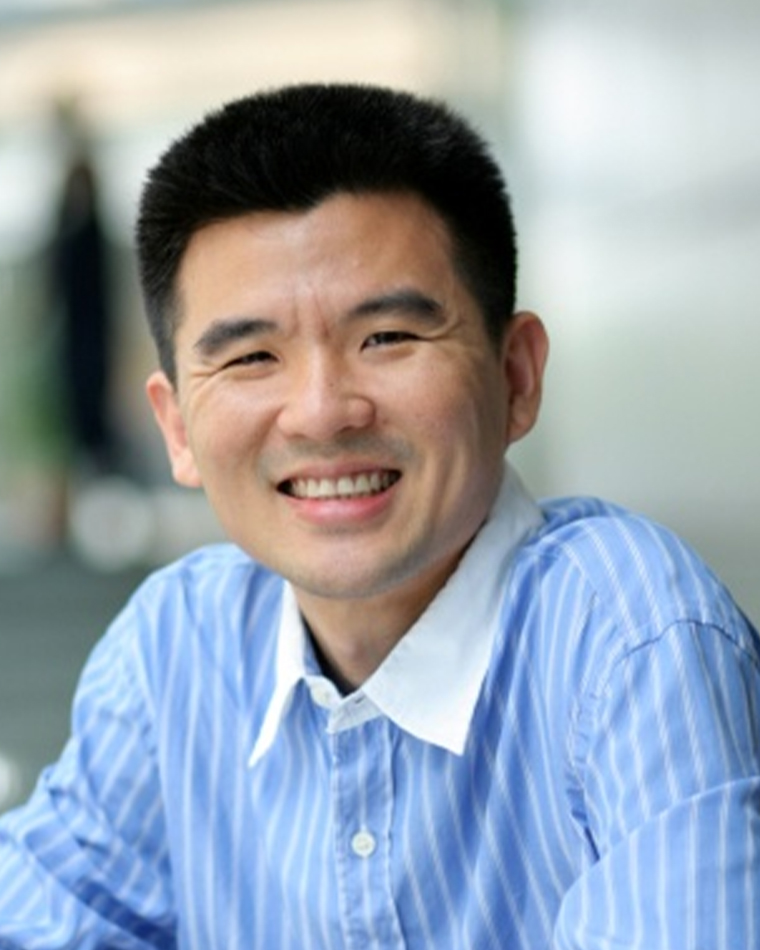 Tony Q.S. Quek
IEEE Fellow, WWRF Fellow
Fellow of Academy of Engineering Singapore Associate Provost (AI & Digital Innovation) Cheng Tsang Man Chair Professor ST Engineering Distinguished Professor Director, Future Comms R&D Programme, Singapore University of Technology and Design Talk TitleToken Communications in AI-RAN: A Pathway towards Robust and Scalable AI Services AbstractToken Communication is a emerging paradigm, where intelligent agents such as small and large language models and general-purpose robots are connected through fundamental AI processing units known as tokens. These discrete units are semantic information employed by foundation models. On the other hand, there is a recent trend to explore the concurrent use of converged computer-and-communications infrastructure to run RAN and AI workloads, enhancing platform utilization and creating new monetization opportunities at the edge. This concept is known as AI-RAN, which natively implements AI-driven RAN functionalities, enabling site-specific RAN operations and improving KPIs at the edge. In this talk, we will provide an overview how token communications intersect with AI-RAN and we will also share some of our recent works in this area. Bio.:Tony Q.S. Quek received the B.E. and M.E. degrees in Electrical and Electronics Engineering from Tokyo Institute of Technology, respectively. At Massachusetts Institute of Technology, he earned the Ph.D. in Electrical Engineering and Computer Science. Currently, he is the Associate Provost (AI & Digital Innovation) and Cheng Tsang Man Chair Professor with Singapore University of Technology and Design (SUTD). He also serves as the Director of the Future Communications R\&D Programme, and the ST Engineering Distinguished Professor. He is a co-founder of Silence Laboratories, NeuroRAN, and TokRAN. His current research topics include wireless communications and networking, network intelligence, non-terrestrial networks, open radio access network, AI-RAN, and 6G.
 Victor O.K. Li
Professor and Advisor to the President, The Hong Kong University of Science and Technology (Guangzhou), China
Emeritus Professor, The University of Hong Kong, China Fellow of the Hong Kong Academy of Engineering Fellow of IEEE and HKIE Talk TitleProbabilistic State-Space Enumeration: From Communication Networks to Neural Networks AbstractHow can we reason about systems with exponentially many configurations without enumerating them all? This keynote connects our 1984 research on communication networks with unreliable components to a new perspective on neural computation in Transformer multilayer perceptrons (MLPs). We partition intermediate channels into groups and define an input-dependent distribution over binary inclusion configurations. With importance-corrected masked outputs, the dense MLP output is recovered exactly in expectation. NORDER-II enumerates configurations in decreasing joint probability without constructing or sorting the full state space. Truncating this enumeration yields an anytime, probability-weighted approximation that prioritizes configurations rather than individual channels. Experiments on Llama-3.2-1B and Gemma-2-2B demonstrate high-fidelity MLP-output approximation and small perplexity changes when selected layers are approximated. The talk explores a shared combinatorial perspective across communication and neural networks, illustrating how classical communications research can inspire new approaches to AI, with opportunities for adaptive inference, conditional computation, and budget-controlled trade-offs between computational effort and approximation quality. Bio.:Victor OK Li is Professor and Advisor to the President at the Hong Kong University of Science and Technology (Guangzhou), and Emeritus Professor at the University of Hong Kong. Born Hong Kong and raised in Hong Kong, he pursued higher education in the United States and earned SB, SM, EE, and ScD in Electrical Engineering and Computer Science from the Massachusetts Institute of Technology (MIT).
 Weihua Zhuang
Professor and a University Research Chair of Electrical and Computer Engineering, University of Waterloo, Canada
Fellow of IEEE Fellow of Royal Society of Canada Fellow of Canadian Academy of Engineering and Engineering Institute of Canada Talk TitleIntelligent Network Management for 6G AbstractThe 6G networks are expected to support a wide range of diverse use cases and applications, along with a significant increase in user data traffic. Artificial intelligence (AI) will be deeply embedded in the design and operation of the networks. Specifically, 6G will transition from an information-centric architecture, which connects people and devices, to intelligence-driven architectures that facilitate seamless data sharing, processing, and mining across devices, the edge, and the cloud within the network. This presentation will examine various aspects of integrating AI into network architecture and operations for intelligent network management and service provisioning. We will introduce a holistic network virtualization architecture designed to support AI functionalities and deliver customized services. Additionally, we will explore split learning for edge AI, which enhances data privacy by retaining raw data on user devices, reduces terminal computational burden through collaborative training with edge servers, and lowers communication overhead via partial on-device processing. We will conclude by discussing the challenges and opportunities associated with network management automation, harnessing the advancements in AI technology. Bio.:Weihua Zhuang is a University Professor and a University Research Chair of Electrical and Computer Engineering at University of Waterloo, Canada. Her research focuses on network architecture, algorithms and protocols, and service provisioning in future communication systems. She was the Editor-in-Chief of the IEEE Transactions on Vehicular Technology from 2007 to 2013, General Co-Chair of 2021 IEEE/CIC International Conference on Communications in China (ICCC), Technical Program Chair/Co-Chair of 2017/2016 IEEE VTC Fall, and Technical Program Symposia Chair of 2011 IEEE Globecom. She served as the President of the IEEE Vehicular Technology Society in 2023-2024. Dr. Zhuang is a Fellow of the IEEE, Royal Society of Canada, Canadian Academy of Engineering, and Engineering Institute of Canada. |